About
The Movement!
MEET THE FOUNDER OF THE PURPOSE DOESN’T PAUSE MOVEMENT
Hey I’m Hope - Just a Girl from a Town of 10,000
People usually laugh when I say that, but it’s true. And it’s the whole point. If God can use me, He can most certainly use you.
I grew up in Greenwood, Arkansas, married my college sweetheart, Will, after graduating from Pepperdine (a God story all on its own), and spent six years in corporate America. I’m now a stay-at-home mom to our three-year-old, Remi, and our four-month-old baby boy, Walker.
I accidentally started the Purpose Doesn’t Pause movement during Remi’s naptime shortly after leaving my corporate career. At the time, it felt like an accident — a simple post that went viral, people from around the world signing up for a free postcard — but I know without a doubt this was God’s plan all along.
If you’re here reading this, thank you. Truly. I wish I could jump through the screen, hug you, and thank you for believing in this movement and for helping deliver encouragement to women wherever God has placed you today. 🤍
I'm so happy you're here!
🤗
I'm so happy you're here! 🤗
160,000+
WOMEN REACHED
✷
120+
COUNTRIES TOUCHED
✷
$1
TO IMPACT ONE PERSON
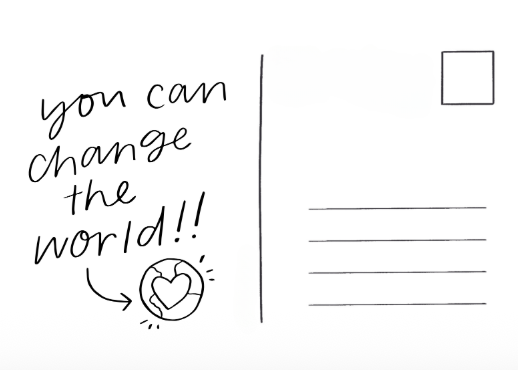
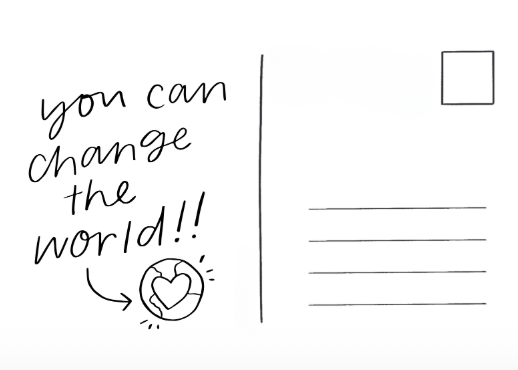
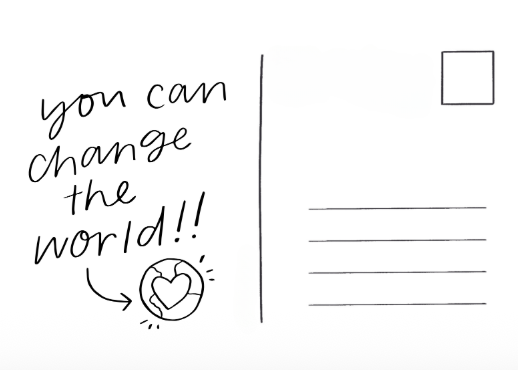
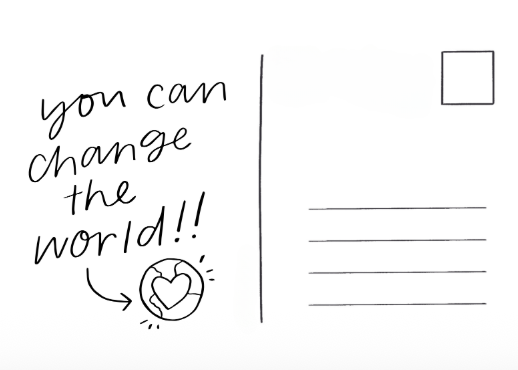
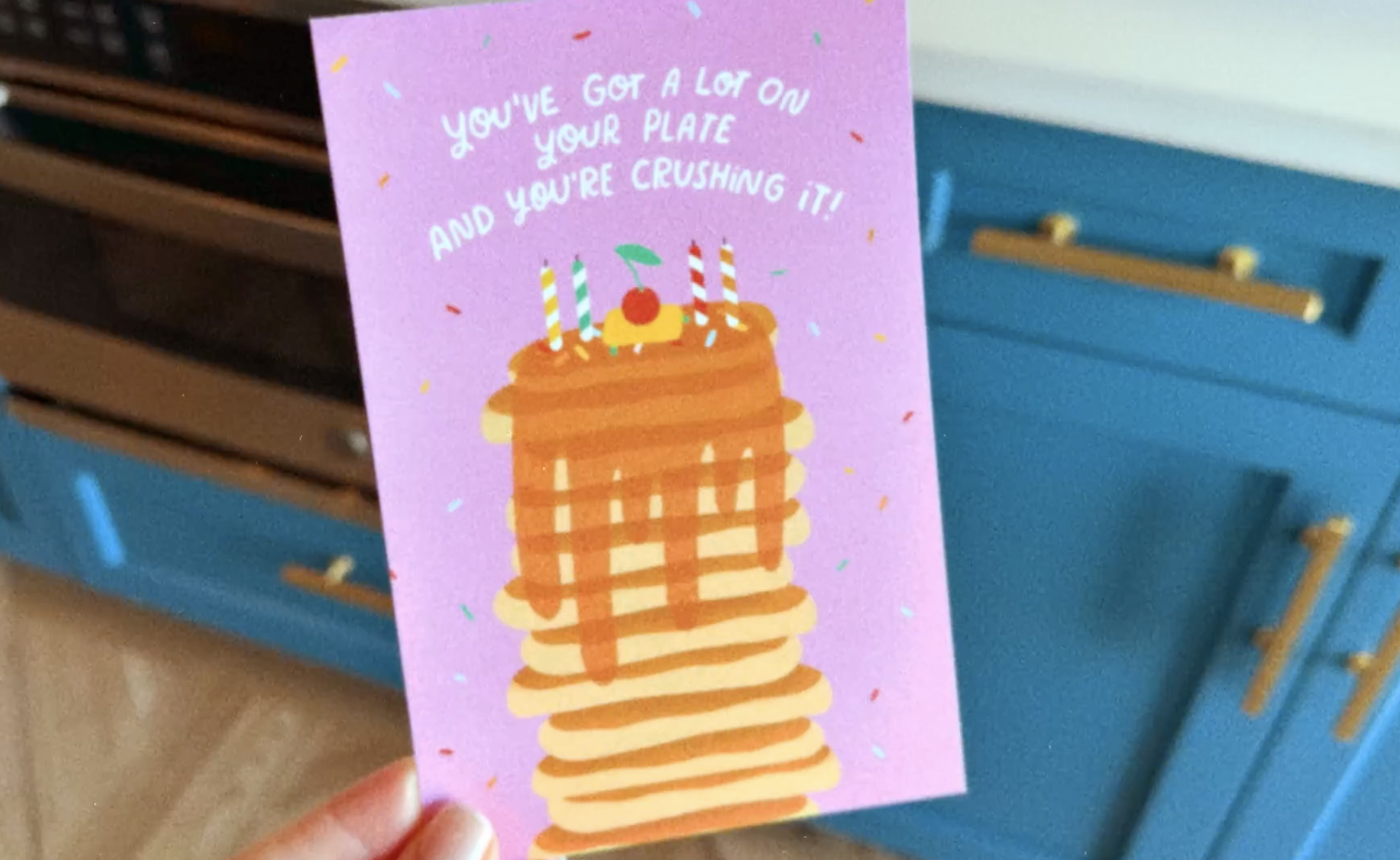
How to Join the World’s Largest Faith-Based Postcard Movement —
Receive a Postcard
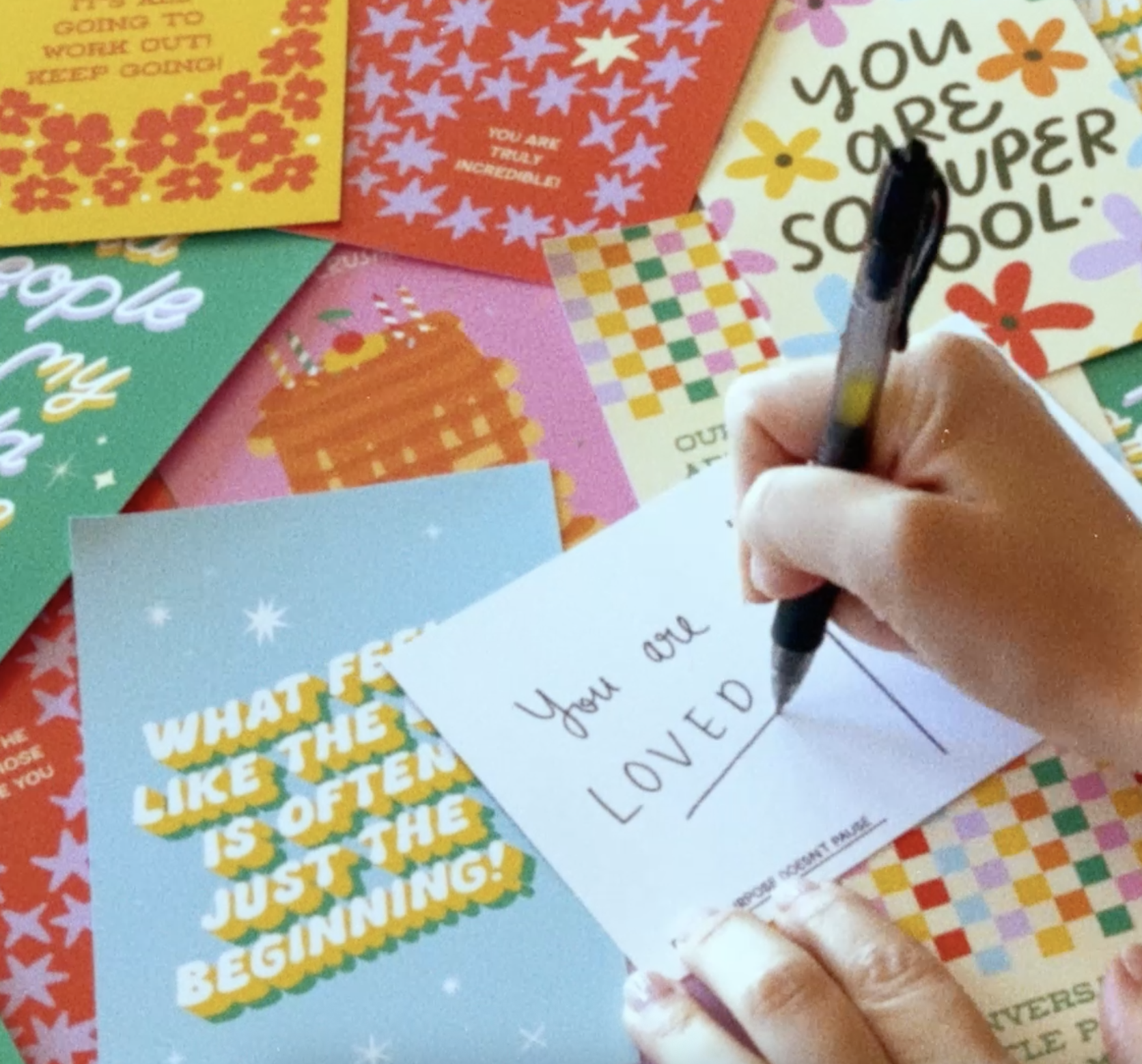
Write a Postcard
Cover the Cost of a Postcard
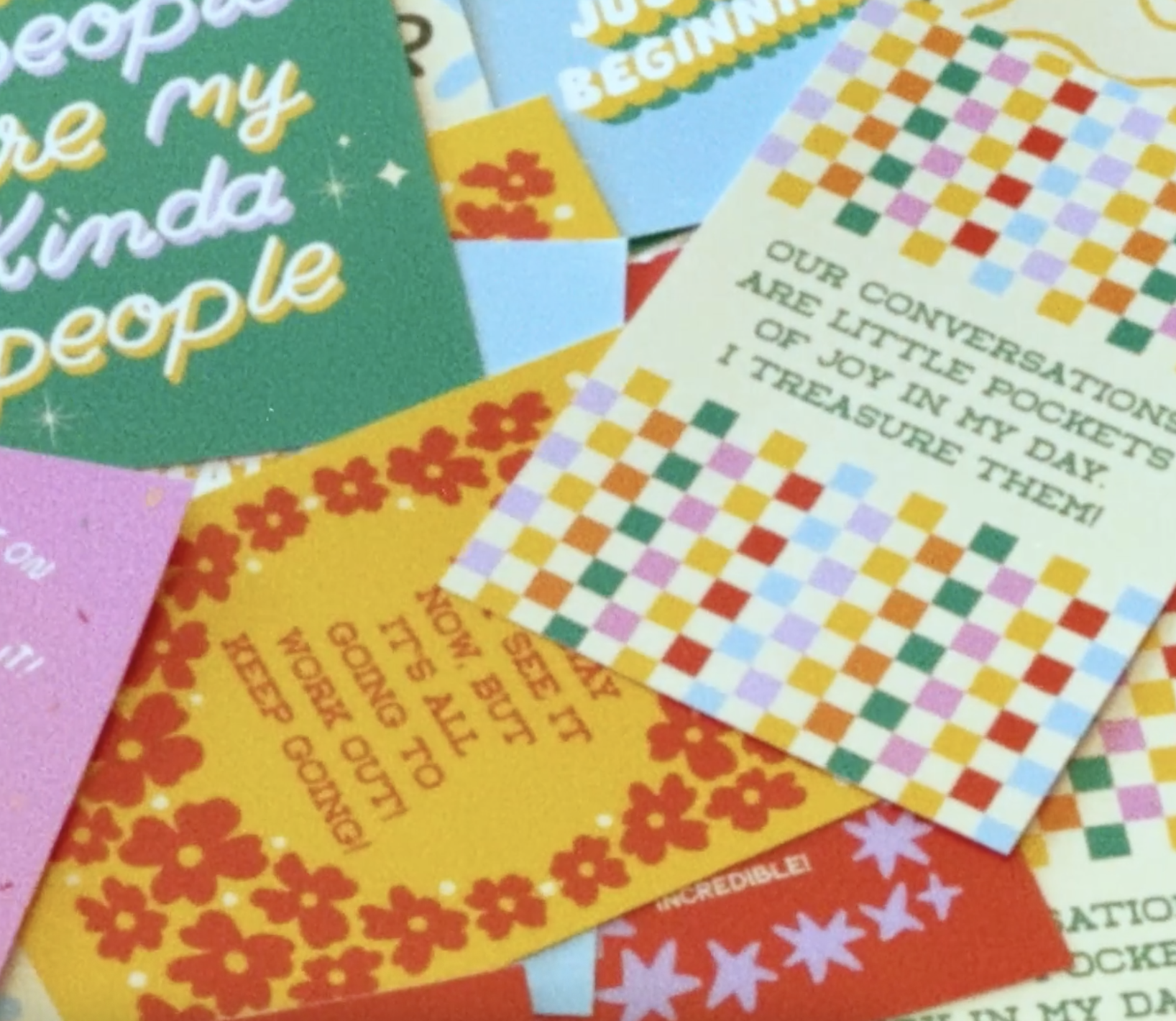
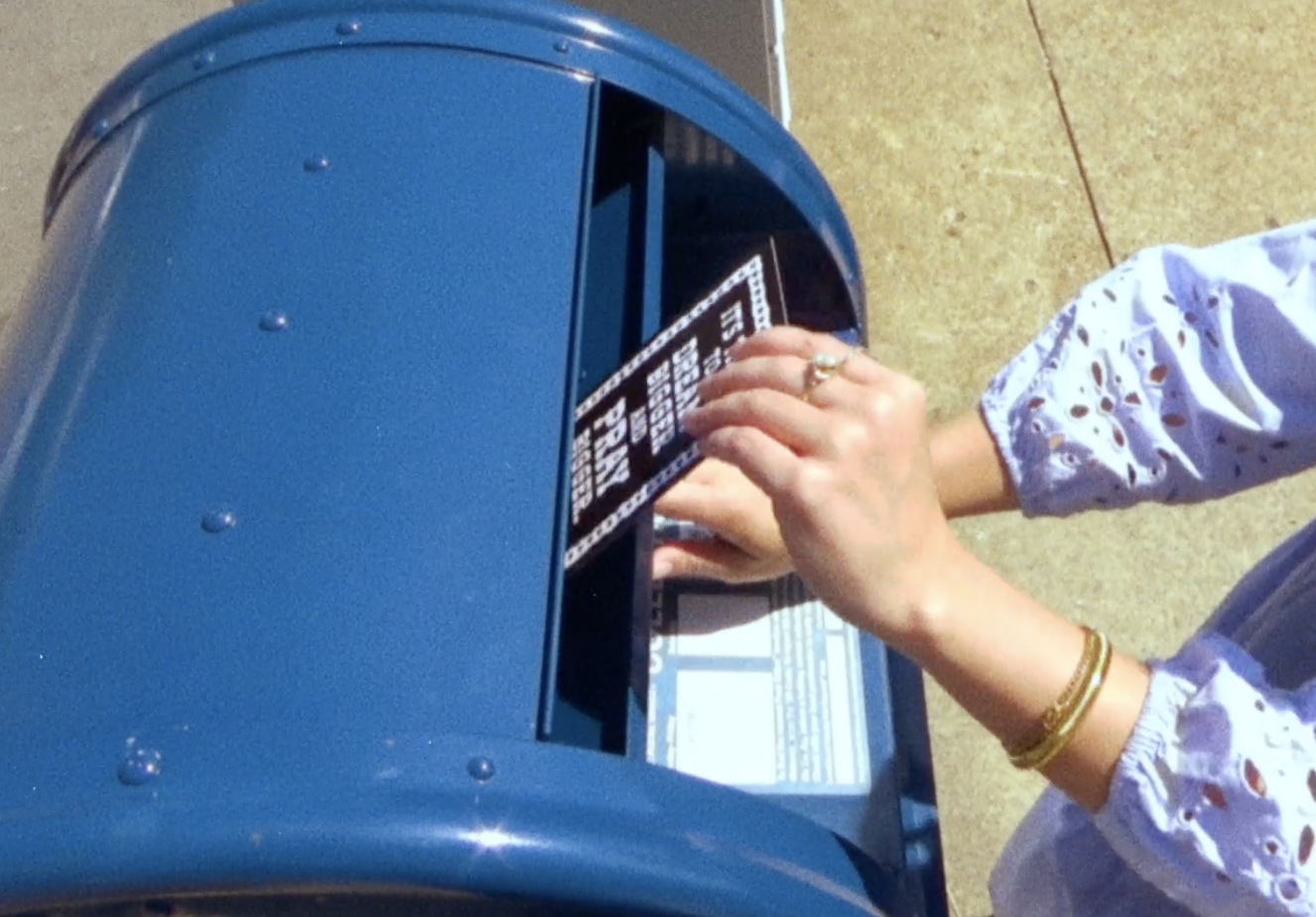
Bringing Hope to Mailboxes Around the World
📪
Bringing Hope to Mailboxes Around the World 📪
WHY postcards?
-
Research shows that receiving handwritten messages strengthens social connection—one of the strongest protective factors for mental health.
Neuroscience research also finds that physical mail triggers a stronger emotional response and memory activation in the brain compared with digital messages — meaning tangible mail sticks emotionally and cognitively.
-
Studies on prosocial writing show that expressing encouragement and kindness boosts the writer’s own sense of joy and purpose.
-
About 80% of people keep cards that represent life or relationship milestones, like birthdays, celebrations, or heartfelt notes — showing that physical cards often become meaningful keepsakes
Meet the Board
and their favorite Postcard
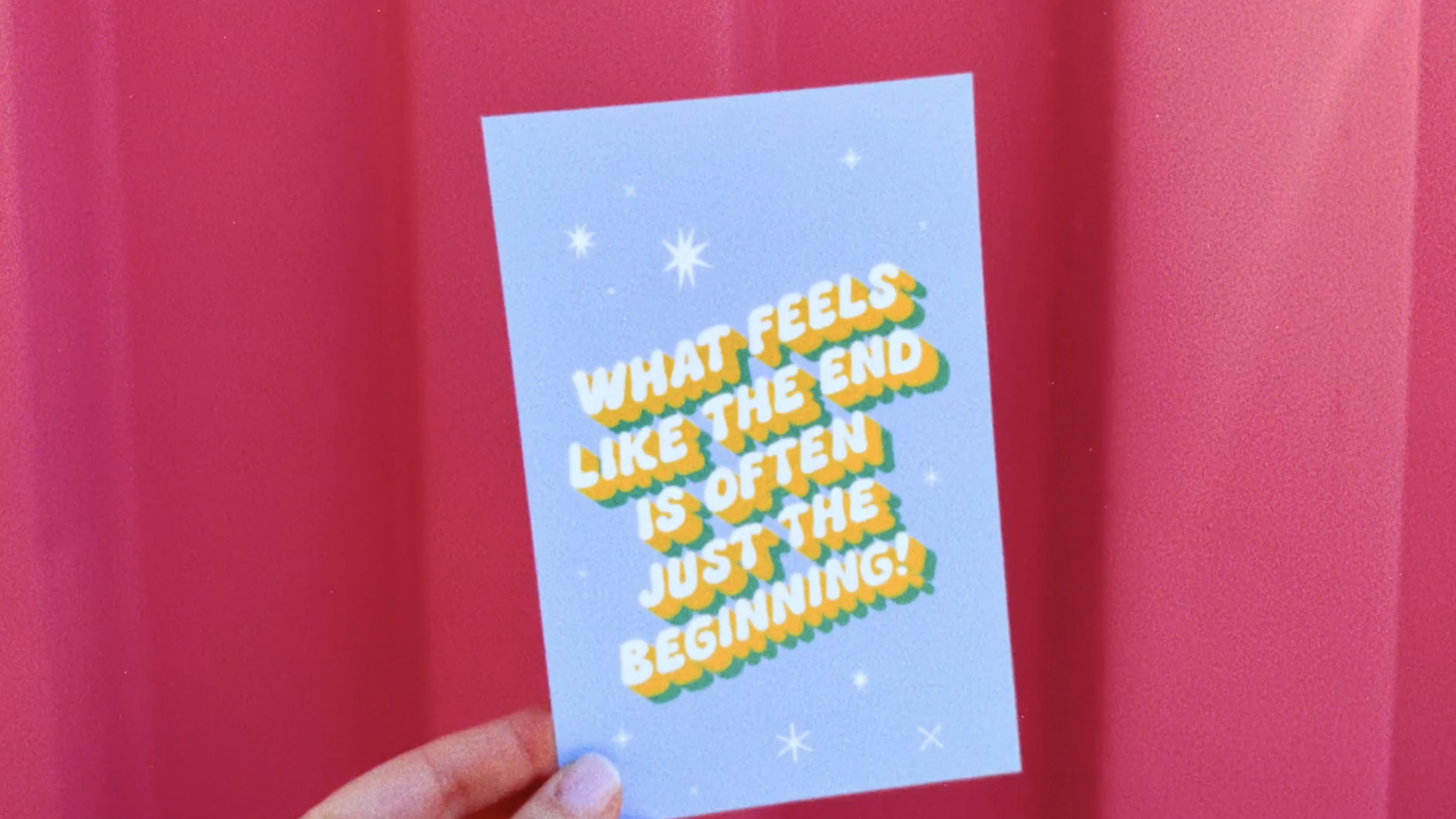
Hilary Davies
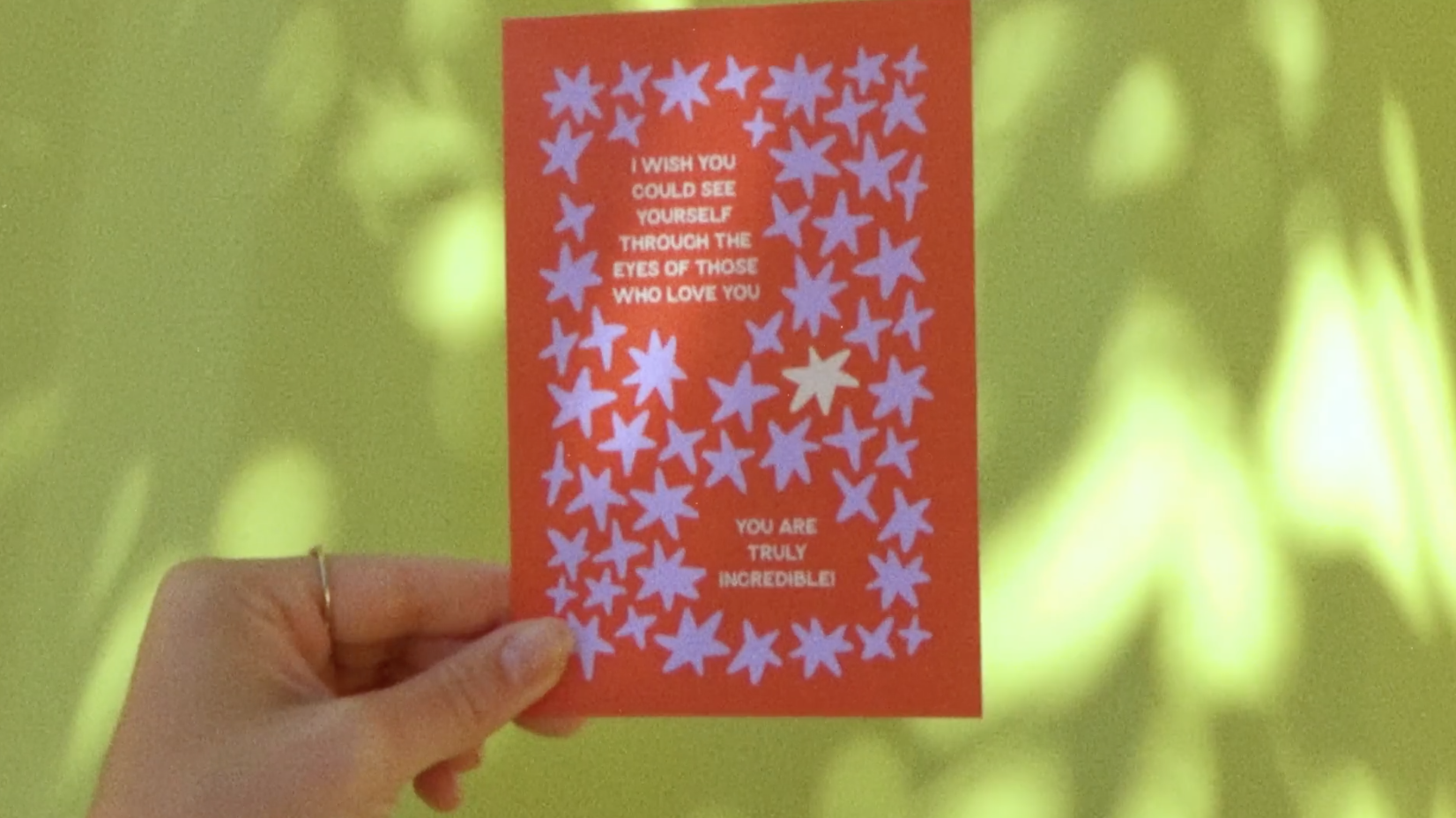
Jackie Johnson
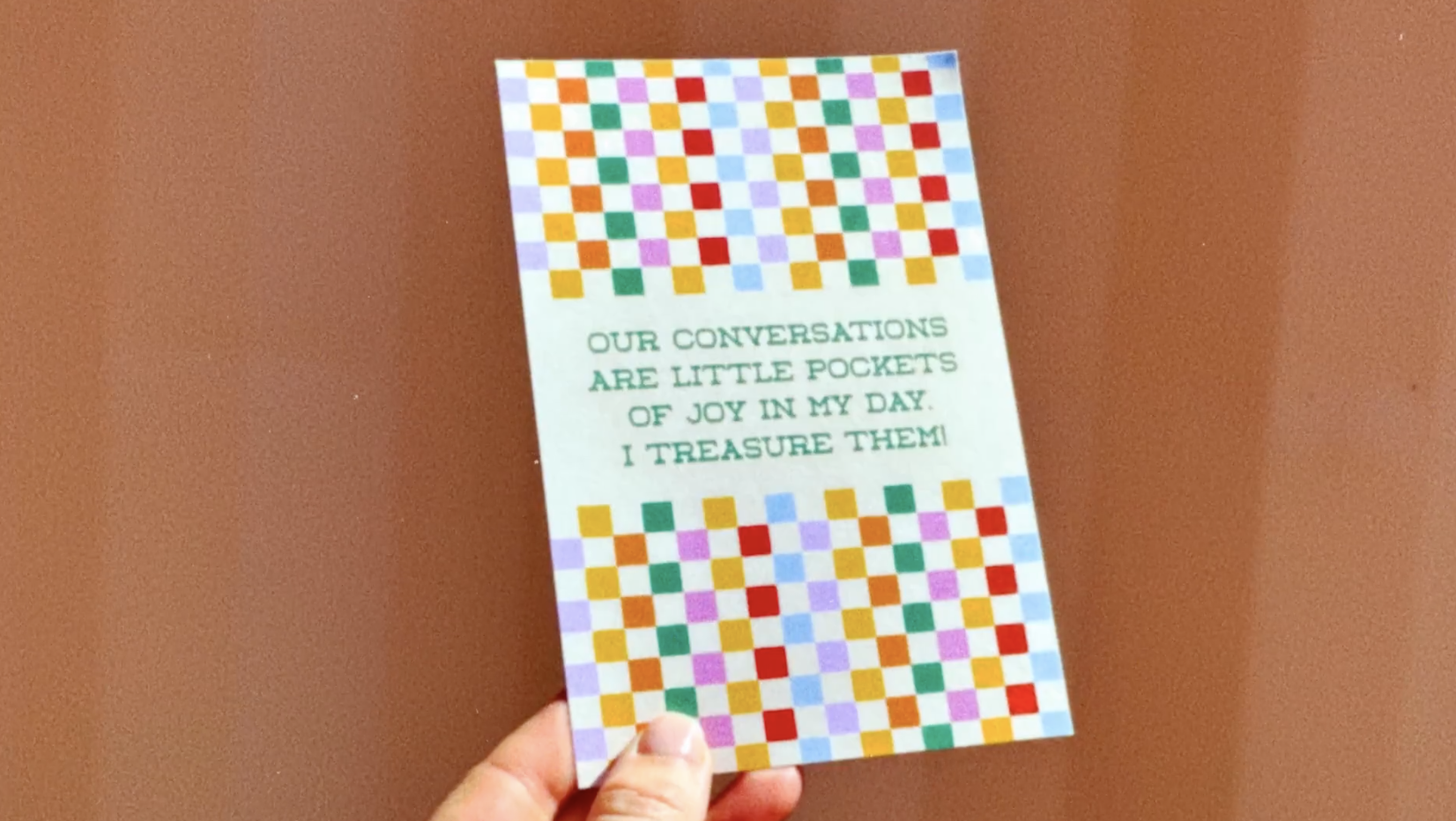
Jordan Miller